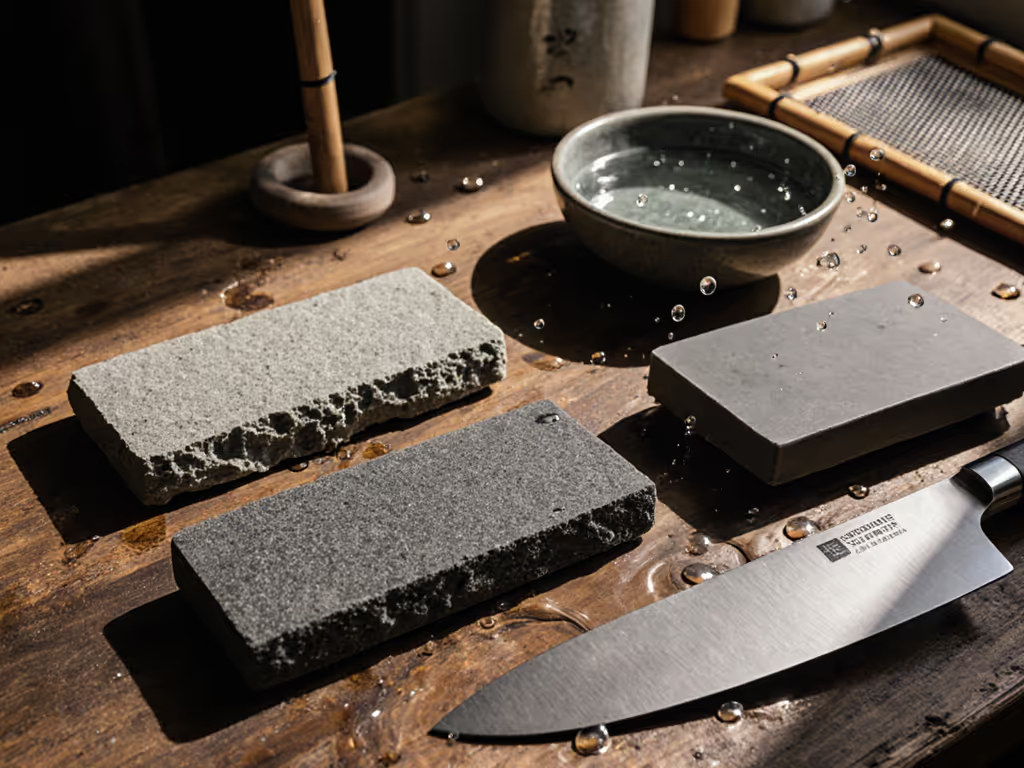
Master Tactile Sharpening Feedback: Step-By-Step Edge Refinement
By Luis Ortega • 11th Dec
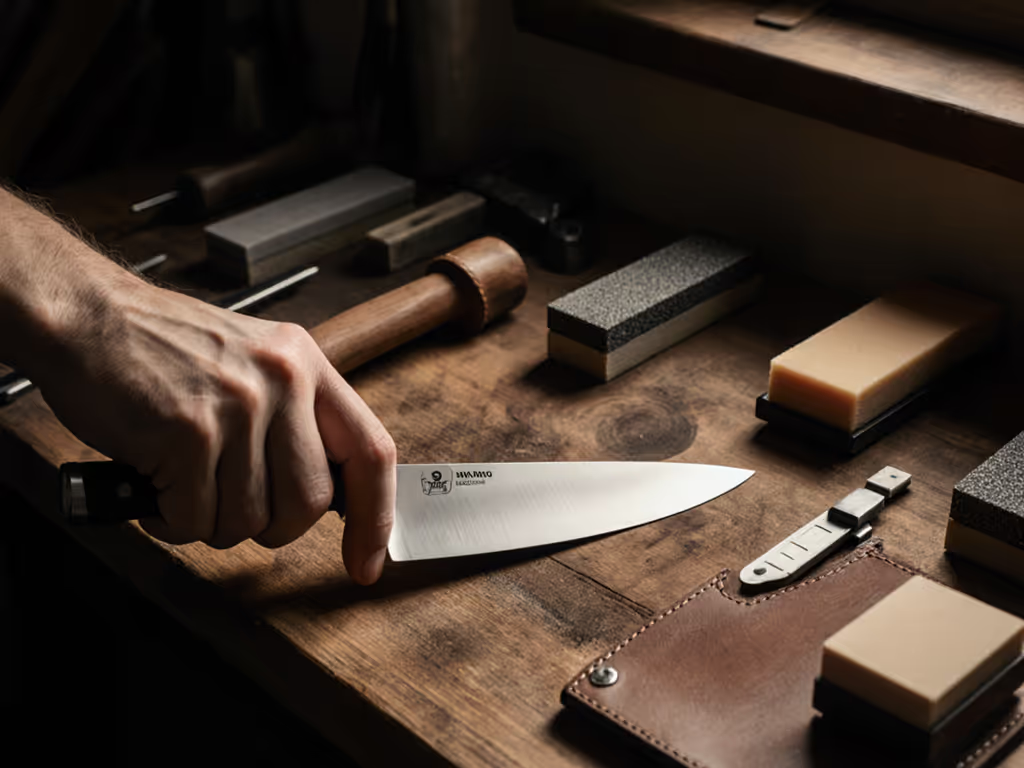
For many kitchen users, the biggest hurdle in knife sharpening isn't just getting a sharp edge (it's knowing when you've got it right). That's where tactile sharpening feedback becomes your secret weapon. Forget confusing visual tests or risky cutting trials. By developing your sense of touch, you'll build repeatable sharpening rhythm that delivers consistent results without the fear of ruining your good knives. This isn't about instant mastery (it's about building confidence through safe, simple steps). When you learn to read what your blade tells you through your fingertips, you transform sharpening from an intimidating chore into a reliable skill you can trust.

Why Your Fingers Are Your Best Sharpening Tool
Most beginners focus only on the visual "how-to" of sharpening, but they're missing the critical dimension: haptic feedback in sharpening. Your sense of touch is actually more reliable than your eyes when detecting subtle edge changes. A dull edge feels smooth and rounded to the touch, while a properly sharpened edge creates subtle resistance as it engages with your testing surface.
The key isn't having super-sensitive fingertips (it's knowing what to feel for and when to feel it). This approach is especially valuable for apartment dwellers or those with noise constraints, as it eliminates the need for loud testing methods or messy cutting trials.
Unsure about which angle to hold? Start with our 15° vs 20° angle guide for consistent, safe results. Before you even touch a stone, remember this non-negotiable rule: safe setup first. Secure your stone properly, clear your workspace of distractions, and mentally commit to minimal pressure. This isn't just about safety; it's about creating the consistent conditions needed for reliable feedback.
Building Your Tactile Awareness Framework
Start with this simple, repeatable framework that builds confidence before speed. After testing dozens of entry-level setups (including a particularly messy weekend on my brother's balcony when he chipped his new chef's knife), I've distilled the process to these essential steps:
Step 1: Establish Baseline Feel
- Clean your blade thoroughly (any residue affects feedback)
- Gently rest your thumb pad perpendicular to the edge (not along it)
- Move slowly from heel to tip, applying barely any pressure
- Note inconsistencies (rough spots, smooth areas, or complete resistance)
"Start safe, then build skill (one consistent pass at a time)."
Step 2: Create Consistent Reference Points
- Before any sharpening session, test your blade using the same light touch method
- During sharpening, pause after every 10-15 strokes for a quick check
- After each side, retest before flipping to the other side
This creates your personal feedback loop. Notice how the edge feels slightly "grabby" when it's developing properly? That's the tactile signal you're building toward. To translate that feel across coarse-to-fine stones, follow our 4-step grit progression for durable edges.
Step 3: Develop Your Pressure Sweet Spot
Sharpening pressure control is the make-or-break factor for beginners:
- Too light: No metal removal, just polishing
- Too heavy: Creates scratches, rounds the edge, and makes control difficult
- Just right: Barely enough pressure to hear a consistent, soft "shhh" sound
Use this pressure checklist:
- Fingertips should remain relaxed (no white knuckles!)
- Stone should rest firmly on non-slip surface
- Only your leading hand applies directional pressure
- Back hand only guides, never pushes
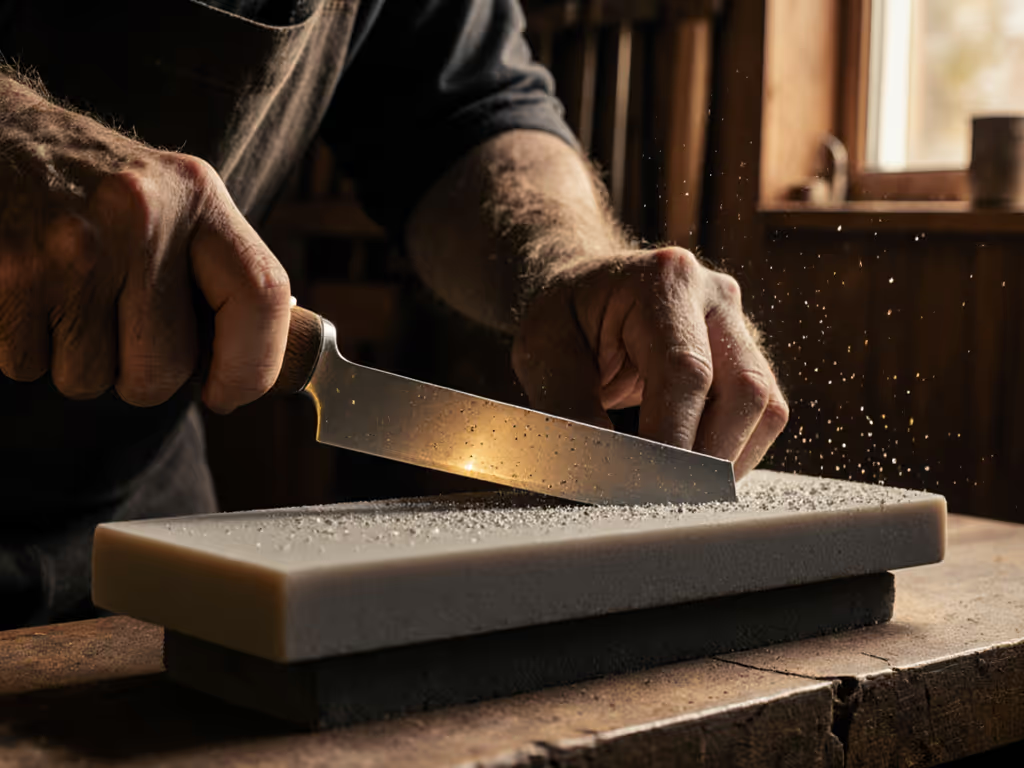
This low-mess approach preserves your knife's finish while building the muscle memory you need for consistent results. The feedback from proper pressure feels like a gentle vibration traveling through the blade (a subtle but unmistakable signal when you've got it right).
Mastering Your Sharpening Rhythm
Your rhythm determines edge consistency more than you might think. Sharpening rhythm development transforms random strokes into a repeatable skill. Here's how to build it:
Find Your Natural Stroke Pattern
Try these two approaches to discover what works for your hand size and strength:
- The Sawing Motion (best for shorter blades)
- Short, controlled back-and-forth movements
- 2-3 inches per stroke
- Consistent angle throughout motion
- The Arc Motion (best for chef's knives)
- Curved strokes from heel to tip
- Maintain constant angle by rotating your wrist
- Smooth, continuous motion
Feedback Checkpoints in Your Rhythm
Place these tactile checkpoints at regular intervals in your stroke pattern:
- At the heel: Edge should feel slightly more resistant (common wear point)
- At the midpoint: Smooth transition, no sudden changes
- At the tip: Consistent feel without excessive pressure
As you develop your rhythm, you'll notice that a properly sharpened edge creates uniform feedback along the entire blade. Inconsistent feedback means you're putting more pressure on certain sections (most commonly at the tip where it is easiest to lose control).
The Consistency Test
After completing your sharpening session, perform this simple verification:
- Run your thumb perpendicular to the edge at five points (heel, quarter, center, three-quarter, tip)
- The resistance should feel remarkably similar at each point
- A dull section will feel noticeably smoother
This edge refinement detection method requires no special tools (just your attention and developing sensitivity). When all points feel consistently "grabby," you've achieved true edge uniformity.
Troubleshooting by Touch Alone
Even experienced sharpeners hit roadblocks. Here's how to diagnose issues through tactile sharpening feedback alone:
Problem: Uneven Pressure Along the Blade
Feedback Signal: Smooth section in one area, grabby in another Solution: Slow down your stroke speed and focus on maintaining consistent hand position
Problem: Wire Edge (Burr)
Feedback Signal: Edge feels "fuzzy" or catches your skin slightly Learn what a burr actually is—and how it forms—in our burr formation explainer. Solution: Alternate sides more consistently and reduce pressure (this is actually a good sign that you've removed enough material!) Finish by removing the burr with a light leather strop technique to clean up the edge without over-grinding.
Problem: Rounded Edge
Feedback Signal: Smooth feel with no grab anywhere Solution: Increase your angle slightly and focus on the very edge of the blade
Remember: developing your tactile feedback takes practice. Don't get discouraged if your first few attempts feel inconsistent. Each session builds your sensitivity and refines your technique. The most successful beginners are those who embrace small wins (like noticing that one stroke where everything felt perfectly aligned).
Take Your First Confident Step Today
Tactile sharpening feedback isn't magic (it is a learnable skill that builds confidence through safe, repeatable practice). Start with your most affordable kitchen knife (not your prized chef's knife!) and practice the baseline feel test daily for one week. Notice how your sensitivity improves with consistent attention. This foundation of sharpening rhythm development and pressure control will serve you whether you're using a $20 stone or a professional setup.
Your next actionable step: Set aside just 5 minutes today to practice the baseline feel test on your main kitchen knife. Document what you feel in a simple notebook ("heel smooth, center grabby, tip inconsistent"), and revisit it in a week. This tiny habit creates monumental confidence. Remember my core truth: Confidence grows when the process is safe, simple, and repeatable. Now go feel your way to sharper knives!
Related Articles