
How Edge Physics Creates Effortless Cuts
By Sora Tanaka • 18th Nov
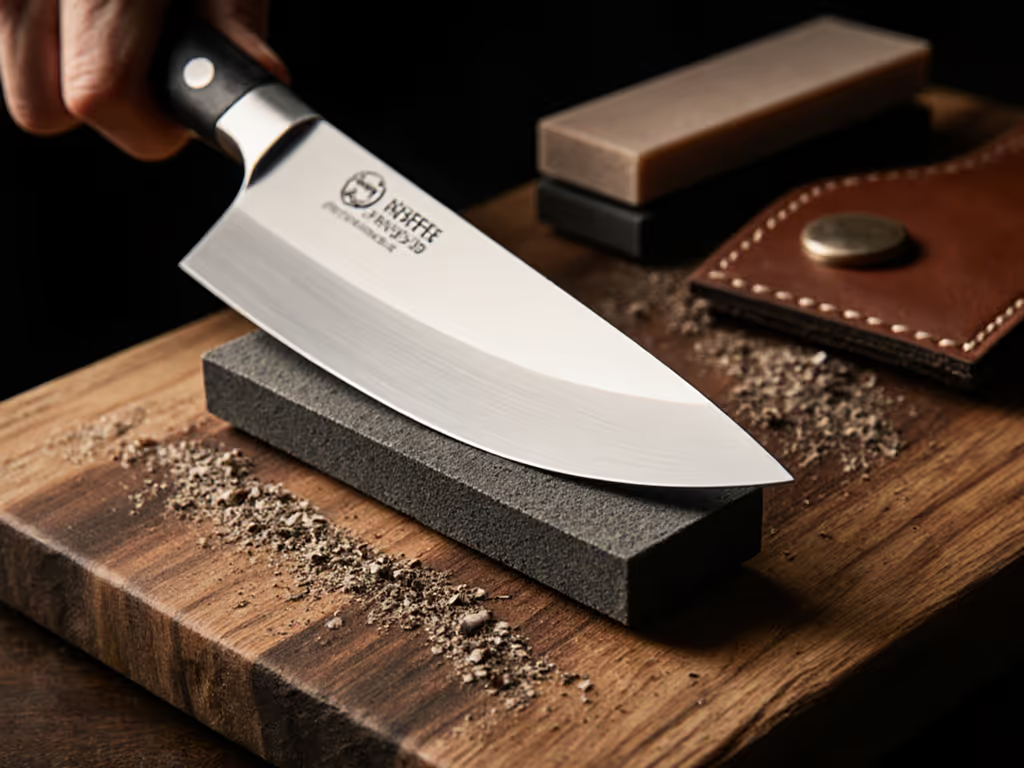
Understanding the physics of sharpness transforms sharpening from guesswork to precision. The science of knife edges reveals why certain techniques produce that effortless slice while others leave you wrestling with crushed tomato skins. I've spent years observing how steel behaves at the microscopic level (not through complicated theories, but through the honest feedback of a whetstone). When you grasp the physics behind your knife's edge, you're no longer just sharpening; you're engineering performance. This isn't academic trivia; it's practical knowledge that puts control back in your hands. If you're new to the craft, start with our beginner-friendly knife sharpening fundamentals to turn physics into practice.
FAQ Deep Dive: Cutting Through the Confusion
What does "sharpness" actually measure in physical terms?
Sharpness isn't an abstract concept: it's quantifiable physics. At its core, sharpness measures the thickness of the edge at a specific point, typically 3 microns back from the very apex. This measurement, often called the BESS score (Blade Edge Sharpness Scale), correlates directly with cutting performance. A thinner edge creates higher pressure per square inch, allowing it to penetrate materials with minimal force. However, don't confuse thinness with fragility; proper edge geometry maintains durability while maximizing cutting efficiency. The "perfect" edge balances molecular-scale thinness with the structural integrity needed for your specific cutting tasks.
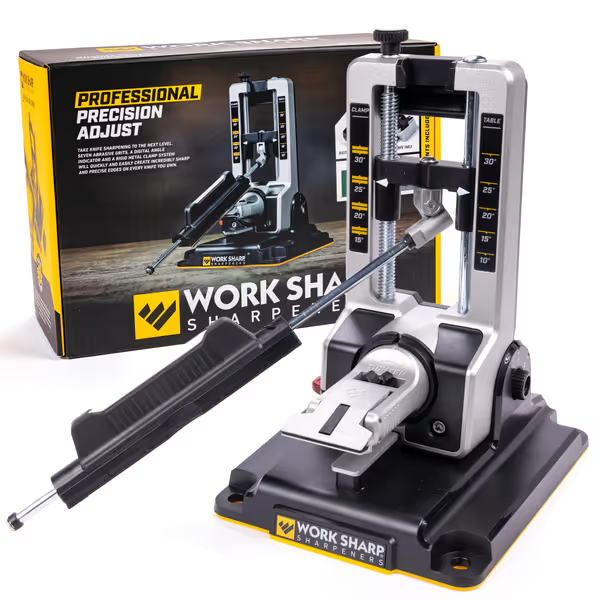
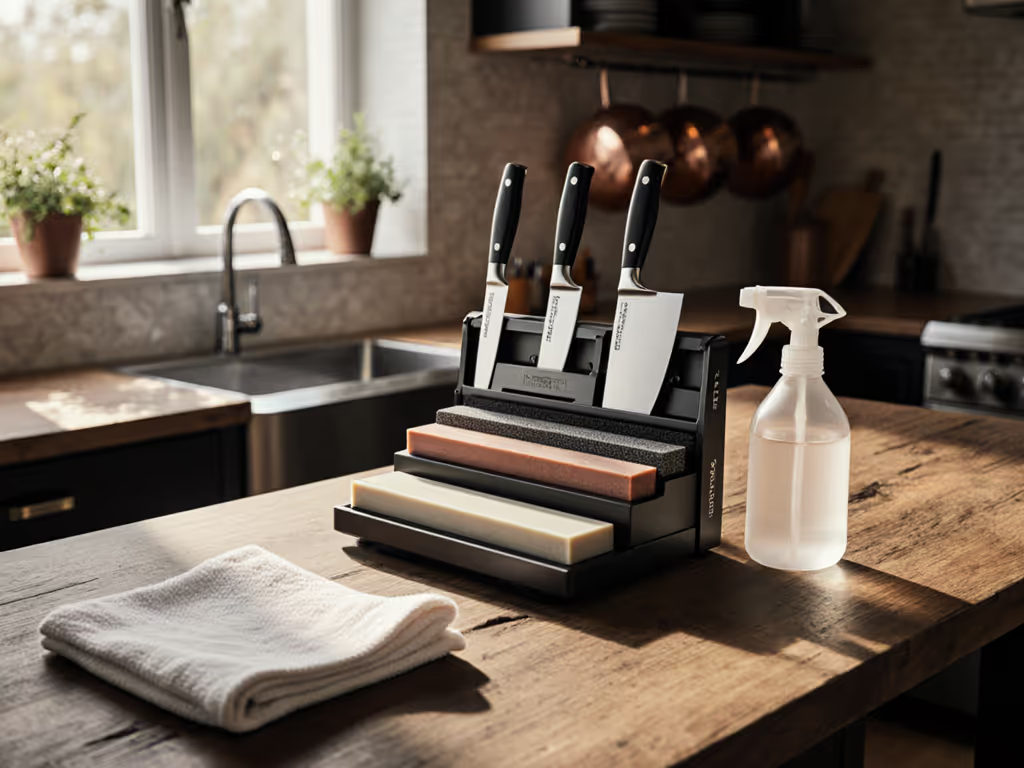
Work Sharp Professional Precision Adjust
Achieve consistent, razor-sharp edges on all knives, from tiny to large.
$249.95
Adjustable Sharpening Angles15 to 30 degrees (digital indicator)
Adjustable Sharpening Angles15 to 30 degrees (digital indicator)
Pros
Delivers razor-sharp edges, even on difficult blades.
Versatile: handles pocket, hunting, kitchen, and serrated knives.
Robust metal construction and 7 abrasive grits for precision.
Cons
Angle adjustment system can be wiggly for some users.
Higher price point compared to basic sharpeners.
Customers find the knife sharpener delivers amazing results, particularly noting its effectiveness on small pocket knives and ability to create razor-sharp edges. They appreciate its solid construction, ease of use, and ability to sharpen almost any knife, with one customer mentioning they sharpened 10-12 knives over the weekend.
Customers find the knife sharpener delivers amazing results, particularly noting its effectiveness on small pocket knives and ability to create razor-sharp edges. They appreciate its solid construction, ease of use, and ability to sharpen almost any knife, with one customer mentioning they sharpened 10-12 knives over the weekend.
How does edge geometry affect cutting performance in real-world use?
Edge geometry physics explains why your knife excels at certain tasks and fails at others. Straight edges create clean push cuts by concentrating force along a single vector, while serrated edges work through a series of micro-punctures that separate material with minimal deformation. The critical factor is the included angle, the space between the two bevels meeting at the edge. A 15-degree included angle (common in Japanese kitchen knives) creates minimal resistance for precise slicing, while a 25-degree angle (typical for Western chef's knives) provides durability for heavy chopping. When you're sharpening, cutting force mechanics dictate that the angle must match your intended use: too acute, and the edge chips; too obtuse, and it crushes rather than cuts.
Why do some knives maintain sharpness longer than others despite similar sharpening?
This brings us to material science of blades. For how carbon, stainless, and ceramic compositions change technique, see knife steel types and match your method to the material. High-end steels like M390 or S35VN contain carbide structures that resist deformation, but they also present sharpening challenges. The key insight isn't about the steel's hardness alone; it's about how the carbides align at the micro-edge. When you raise a clean burr, you're testing whether your sharpening technique has properly exposed these carbides. A consistent angle preserves the alignment; an inconsistent one creates micro-fractures that accelerate dulling. This is why I focus on checkpoint-driven progression: on your 1k stone, can you raise a burr that's uniform along the entire edge? That's your first objective test of proper technique. Then build consistency with a smart grit progression from coarse to fine so each stage does specific work.
How does the burr actually contribute to creating a sharp edge?
The burr isn't a flaw; it's essential physics in action. As you sharpen, the abrasive pushes metal across the edge, forming a microscopic wire edge. This burr indicates that your stone has cut through the entire bevel profile. But for true sharpness, you must remove this burr through careful alternating strokes while maintaining perfect angle consistency. A light finishing pass on a leather strop refines the apex and strips residual wire. The physics is straightforward: an intact burr creates drag against the material you're cutting. Only when you've carefully removed it (leaving a clean, supported apex) does the knife achieve maximum cutting efficiency. Control the angle, control the outcome. Steel tells the truth.
What practical feedback cues should I watch for while sharpening?
Look for these physics-based checkpoints:
- Tactile feedback: On finer stones, the texture changes from "grabbing" to "gliding" as the burr forms
- Auditory cues: A clean burr creates a subtle change in sound, like a whisper replacing a rasp
- Visual confirmation: Under good light, you'll see the edge become reflective as it sharpens
- Angle consistency: Your edge geometry clarity improves when you can maintain the same angle stroke after stroke
I remember Saturdays spent chasing this feedback on inexpensive stainless steel. For months, it was just me and a 1k stone, no shortcuts, no gadgets. When I finally heard that sound change consistently, I understood that the path to mastery isn't about speed or tools, but about consistent practice with measurable feedback.
How can I measure improvement without specialized equipment?
You don't need expensive tools to verify sharpness measurement principles. Try these accessible tests:
- Paper test: A truly sharp knife will cut paper with minimal pressure, producing a clean edge without tearing
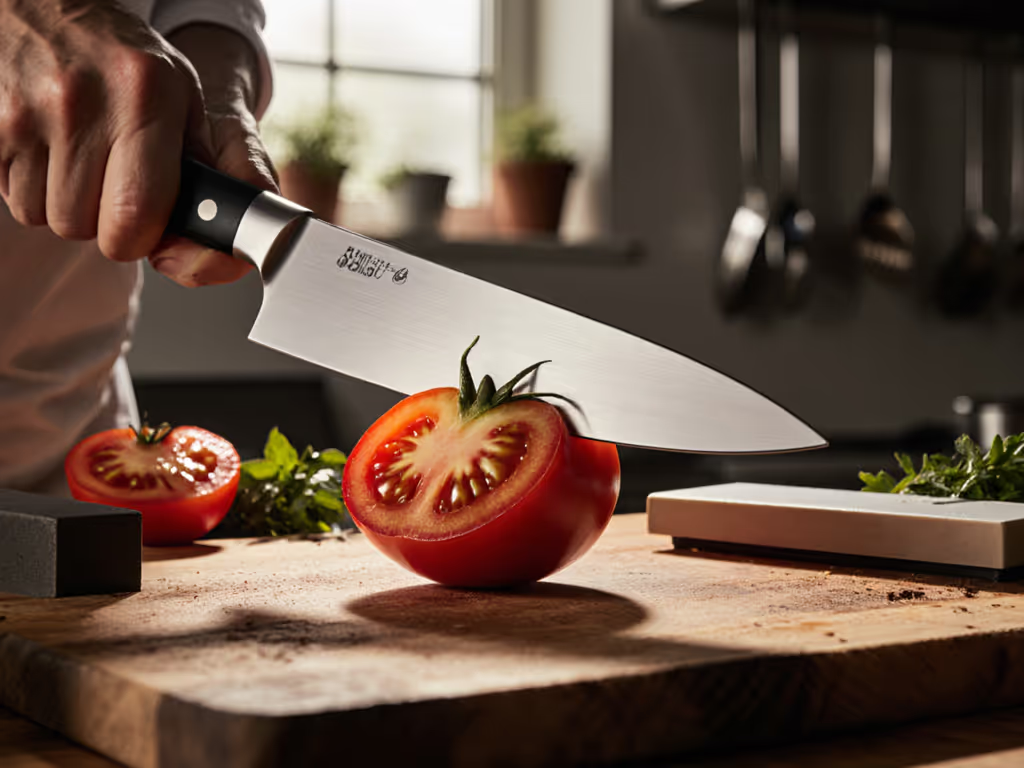
- Tomato skin test: Look for effortless penetration without crushing the delicate flesh beneath
- Arm hair test: Done carefully, this reveals micro-burrs and edge continuity
- Burr detection: Drag your thumb perpendicular to the edge (carefully); a consistent burr feels like a fine wire
These tests provide immediate feedback on whether your technique creates the physics of sharpness required for effortless cutting. Remember, consistency over speed. Every stroke should build toward a measurable improvement.
Further Exploration
Understanding the physics behind your knife's edge transforms sharpening from a chore into a precision craft. When you raise a clean burr through deliberate practice, you're not just creating a sharp edge, you're building the feedback loops that make mastery possible. The next time you pick up your stone, remember that steel never lies: it reflects exactly the attention and consistency you've applied.
For those ready to deepen their understanding, explore how different steel compositions respond to specific abrasives, or study high-magnification edge analysis to visualize the geometry you're creating. The journey from functional sharpness to professional-level performance isn't about shortcuts; it's about embracing the physics with patience and precision. Your kitchen, your tools, and your ingredients deserve nothing less.
Related Articles