CBN Sharpening: Precision for Hard Steel Knives That Lasts
By Luis Ortega • 4th Dec
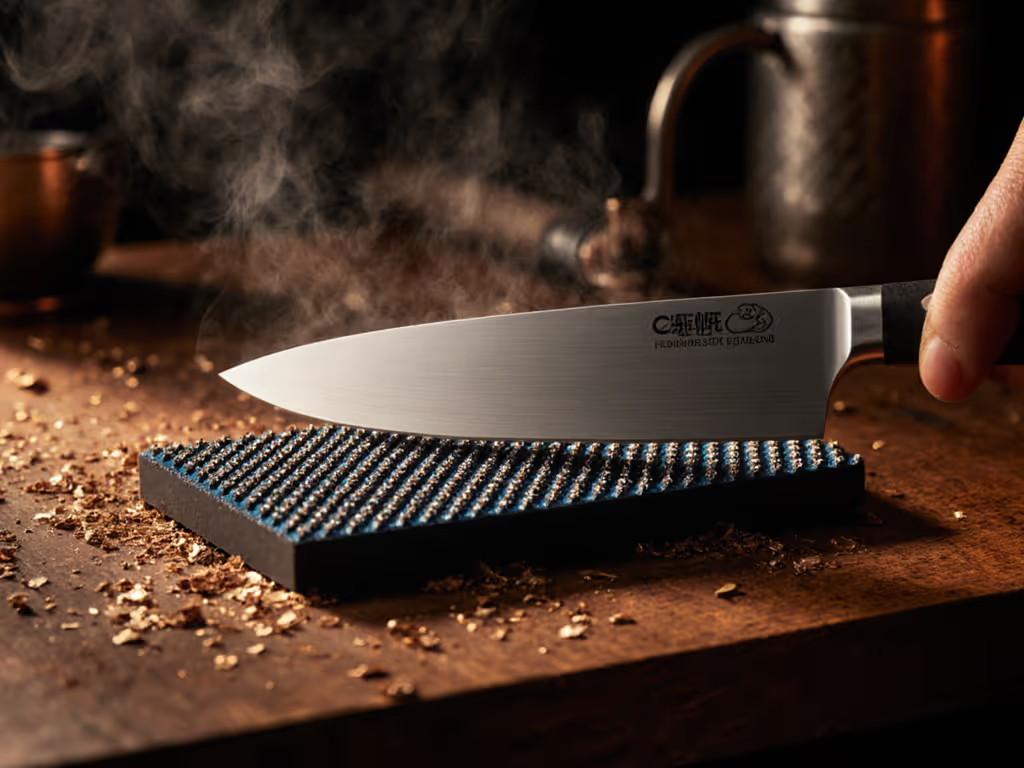
When your high-carbon kitchen knife (maybe that pricier one you saved for) starts crushing tomatoes instead of slicing them cleanly, it's time to talk about cubic boron nitride sharpening. Unlike traditional stones that struggle with modern hard steels, CBN sharpening technology delivers consistent, long-lasting edges without guesswork. As a kitchen-first educator who's seen beginners chip blades trying to rush results, I'll show you how CBN solves the super-steel sharpening paralysis while keeping your workflow safe, simple, and repeatable. You'll gain confidence one consistent pass at a time, no expensive gear required upfront.
Why Hard Steels Break Traditional Sharpening
Modern kitchen knives often use super steels like M390 or S35VN that resist deformation (great for edge retention) but laugh at your standard sharpening stone. Diamond abrasives work initially but wear down too fast against these alloys, while waterstones clog and require constant flattening. Worse, inconsistent angles during sharpening create weak wire edges that fail under pressure, ruining your prep flow and confidence.
Here's where CBN changes everything. Cubic boron nitride (CBN) is a synthetic compound of boron and nitrogen, second only to diamond in hardness. But crucially, CBN vs diamond abrasives reveals why CBN dominates for steel sharpening: diamonds react chemically with steel's carbon at high temperatures, creating graphite that dulls the abrasive. CBN stays stable, cutting cleanly without binding or glazing. As confirmed by industrial studies, this stability lets CBN tools maintain sharpness 10x longer than conventional wheels when grinding stainless steel blades (translating to your kitchen as fewer passes and precise apex formation).
How CBN Solves Your Top Pain Points
✅ No More Super Steel Struggles
High-hardness steels need abrasives that stay aggressive without skipping. CBN's crystalline structure provides sharp cutting edges that slice through hard alloys like X39Cr13 steel (common in premium chef's knives) without loading up. For example, grit progression matters: a coarse CBN rod (120-220 grit) reshapes damaged edges quickly, while fine grits (600+) polish without removing excessive material. For step-by-step detail, see our 4-step grit progression guide. Remember: always start with the coarsest grit needed, not finer, to minimize total sharpening time.
✅ Angle Consistency Made Tactile
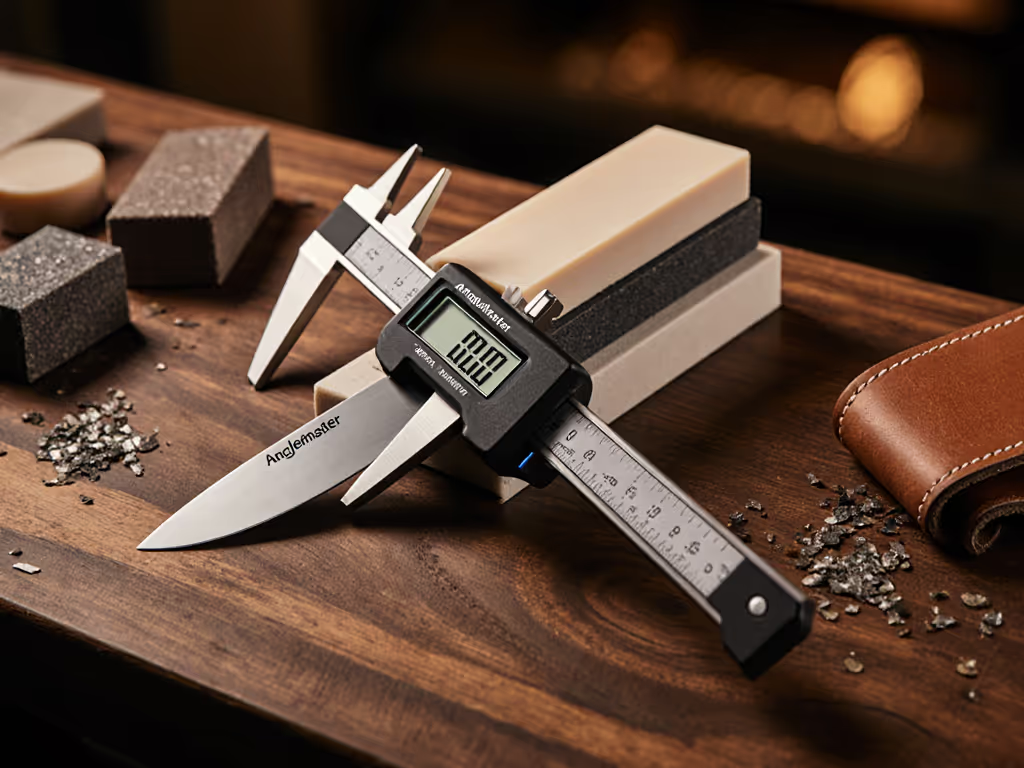
Wobbling your wrist during freehand sharpening? CBN rods paired with angle guides eliminate this. Set your angle once (typically 17 to 22° for kitchen knives), then use the rod's rigidity as a tactile cue: feel the consistent scrape across the bevel. One less variable to master early on.
✅ Low-Mess, Apartment-Friendly Workflow
Forget water pools or diamond slurry everywhere. Most CBN tools work dry or with a drop of oil. I test sharpened kitchen knives on a folded paper towel, no setup, no cleanup. Your only "swarf" is microscopic dust caught in the towel. This fits Luis's core principle: confidence grows when mess and risk are minimized.
Your Beginner-Safe CBN Workflow (Step by Step)
Safety first: Always secure your knife. Clamp it in a jig or use a non-slip mat. Here's how to sharpen safely without spending $300 upfront:
- Assess the Edge: Run your thumb perpendicular to the edge (not along it!). Dull spots feel like speed bumps. Note where reshaping is needed.
- Choose Your Grit: Damaged edge? Start coarse (120-220 grit CBN). Maintenance? Jump to fine (600+ grit). This is your budget path (no need for diamond grits or 10+ stone sets).
- Set Your Angle: For kitchen knives, 20° total angle (10° per side) is foolproof. If you're unsure, compare 15° vs 20° angles to choose the right profile for your knives. Mark a guide line on the blade with a Sharpie if needed: watch where the marker disappears during stropping.
- Sharpen with Tactile Control:
- Hold the CBN rod vertically
- Apply light, consistent pressure (like holding a potato chip)
- Use full strokes from heel to tip
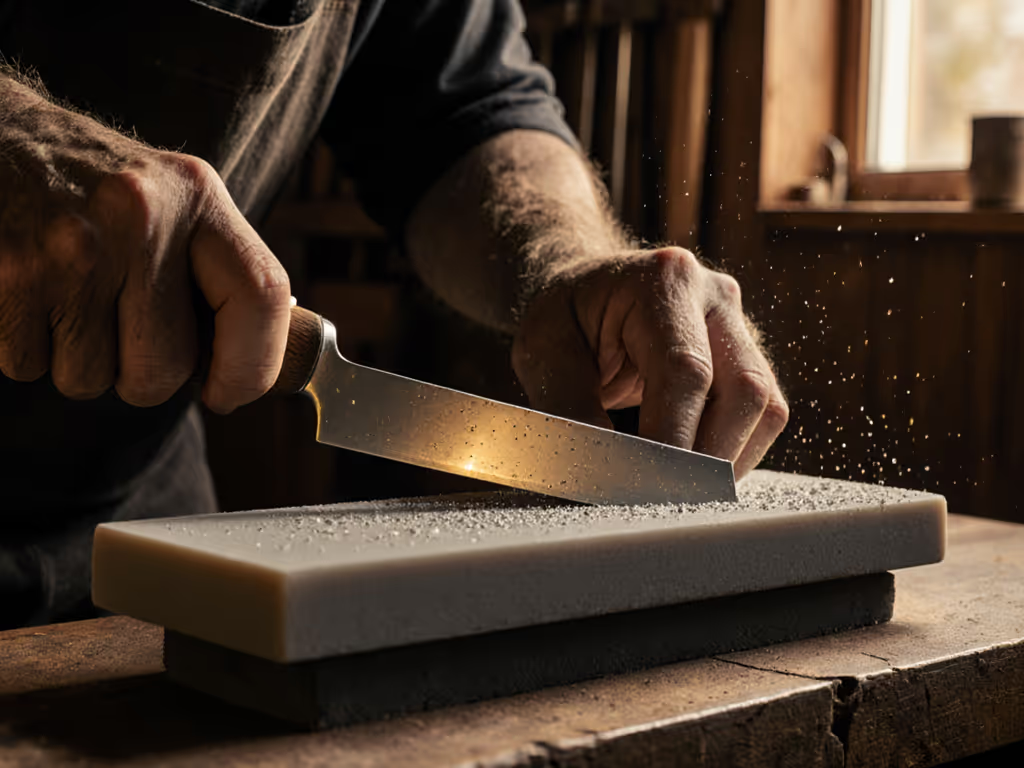
- Aim for one consistent pass per side (5 to 8 seconds)
- Tactile cue: Listen for an even "shhhk" sound; hissing means too much pressure
- Deburr Gently: After final grit, strop on leather or denim. Skip aggressive ceramic rods that can roll the edge.
"Start safe, then build skill ( one consistent pass at a time)." This isn't just philosophy; it's how my brother saved his chipped knife during our balcony tests. No stopwatch, no drama, just repeatable passes restoring confidence (and sharpness).
Maintaining Your CBN Tools for Longevity
Unlike waterstones that degrade, CBN rods need minimal upkeep. For broader maintenance routines across all sharpener types, see our sharpening tool upkeep guide. But neglecting care turns them gummy. Follow this 60-second monthly checklist:
- Clean: Wipe with isopropyl alcohol after 5-10 uses. Stubborn grit? Scrub lightly with an old toothbrush.
- Check for Glazing: Run a finger along the rod, if it feels slick, not gritty, refresh with a coarse diamond stone or hardware store file.
- Store Dry: Keep in a cotton pouch away from moisture. Humidity causes premature wear in resin-bonded rods.
Avoid these common mistakes Luis sees beginners make:
- ❌ Using excessive pressure (creates heat that warps thin blades)
- ❌ Skipping grit progression (removes too much metal)
- ❌ Sharpening serrated edges with rods (use tapered diamond tools instead)
CBN vs. Your Current Options: A Reality Check
| Tool Type | Best For | Hard Steel Limitation | Budget Path? |
|---|---|---|---|
| CBN Rods | Quick touch-ups, consistent angles | None (cuts hard alloys) | ✅ Yes |
| Waterstones | Polished finishes | Clogs with super steels | ❌ $150+ for full set |
| Diamond Plates | Fast reshaping | Glazes on hard steels | ❌ Requires flattening |
| Electric Sharpeners | Speed (if precise) | Often ruins bevels | ❌ $200+ with consumables |
Note how CBN avoids the CBN rod maintenance pitfalls of other systems: no soaking, no flattening, and no special compounds. Just clean, dry, and ready. For true portability, pair a pocket-sized CBN rod with a $15 angle guide (perfect for EDC or camping kits).
Your Actionable Next Step
Don't overthink your first upgrade. Grab a single medium-fine CBN rod (400-600 grit) and practice one consistent pass on a cheap knife. Focus on angle stability and light pressure. Once you feel the difference in cutting performance (tomato skins peeling cleanly, no more squishing onions), you'll see why serious home cooks trust CBN for steel sharpening steel.
When you're ready to scale precision, look for systems with adjustable angle guides (like the KME Precision Kit) that let you lock in angles for repeatable results. But start safe, start simple, you'll build confidence faster than you'll wear out that rod.
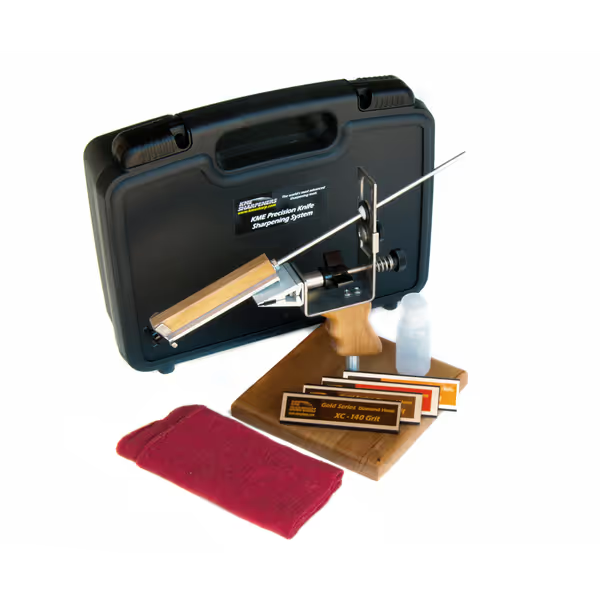
KME Precision Knife Sharpener System
Achieve consistent, hair-shaving sharpness with precision angle control.
$244.9
Angle Adjustment17 to 30 degrees (1-degree increments)
Angle Adjustment17 to 30 degrees (1-degree increments)
Pros
Delivers repeatable, hair-shaving sharp edges fast.
Precise continuous angle control (17-30°) prevents geometry ruin.
Portable system for consistent results anywhere.
Cons
Initial cost higher than beginner pull-throughs.
Learning curve for optimal pressure on diamonds.
Customers find this knife sharpener to be well-built and effective, particularly for everyday knives, with one noting it outperforms other systems. They appreciate its ease of use with minimal learning curve, and one customer mentions it saves time and guesswork. Moreover, the sharpener delivers hair-shaving sharpness and quick results, especially for single bevel broadheads, while maintaining amazingly consistent angles. Customers consider it worth the price.
Customers find this knife sharpener to be well-built and effective, particularly for everyday knives, with one noting it outperforms other systems. They appreciate its ease of use with minimal learning curve, and one customer mentions it saves time and guesswork. Moreover, the sharpener delivers hair-shaving sharpness and quick results, especially for single bevel broadheads, while maintaining amazingly consistent angles. Customers consider it worth the price.
Remember: Sharp knives are safer knives. And with CBN's precision for hard steel, you're not just maintaining tools, you're reclaiming kitchen joy. One smooth pass, one clean cut, one confidence boost at a time.
Related Articles