Best Camper Kitchen Sharpeners: Quiet RV Solutions
By Owen MacLeod • 16th Nov
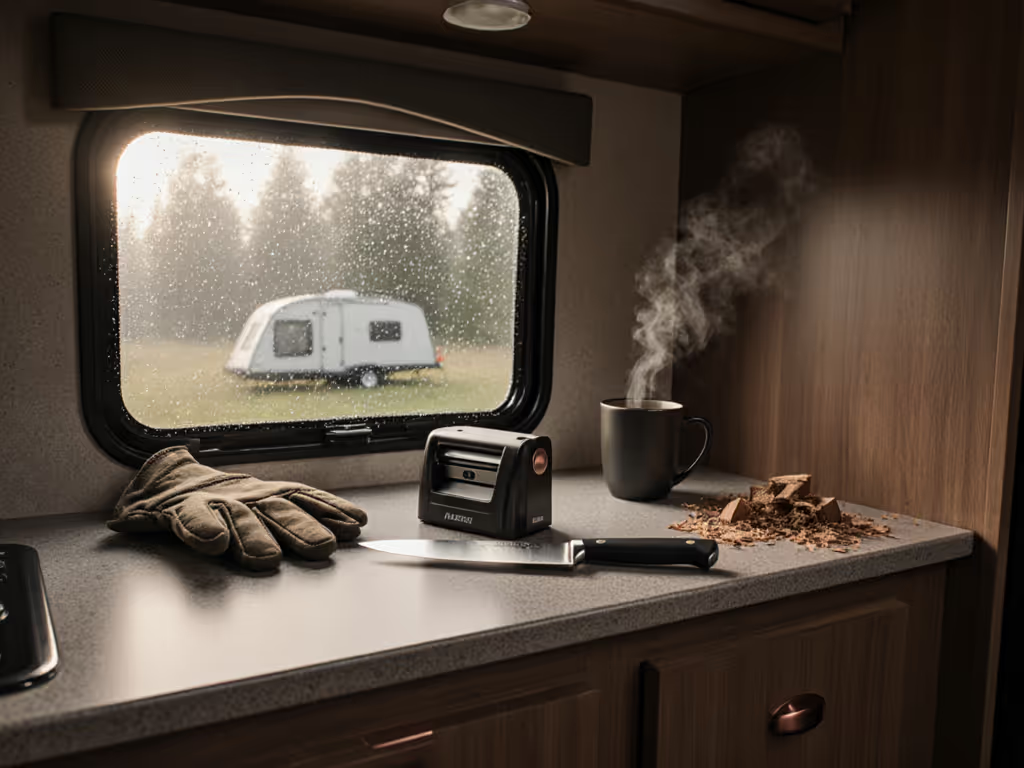
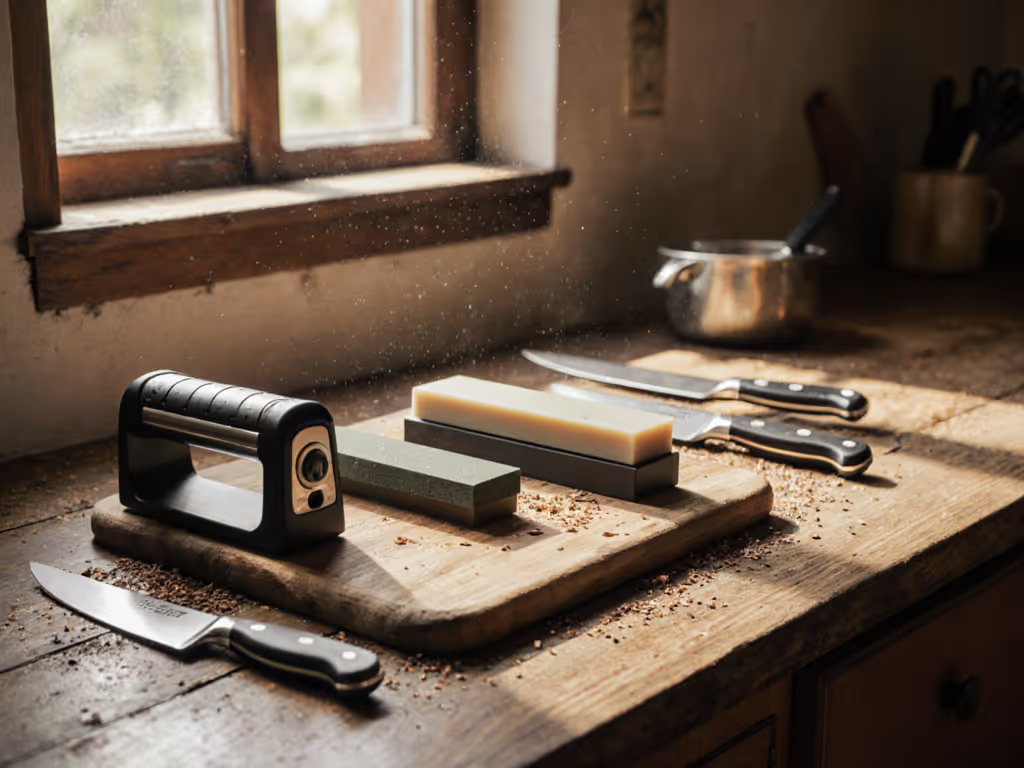
Sharp knives matter more when you're running a kitchen in twelve square feet. Dull blades tear herbs, slip dangerously on tomatoes, and leave you wrestling with meat instead of prepping it. In cramped RV galleys where noise echoes off aluminum walls and space is counted in inches, finding reliable home knife sharpeners that work without disrupting the peace becomes critical. This isn't about showpiece tools (they need to survive the camper kitchen sharpening reality where your workspace might be a wobbly picnic table in a campsite parking lot). Whether you're a weekend warrior or living full-time on the road, I've tested sharpeners not just for speed or edge geometry, but for whether they'll deliver under thumbless gloves at 3 AM in a sleet storm. Gear that fails in the field isn't gear (it's weight). And when your stove's flickering out because you can't process tinder, that extra weight becomes dangerous.
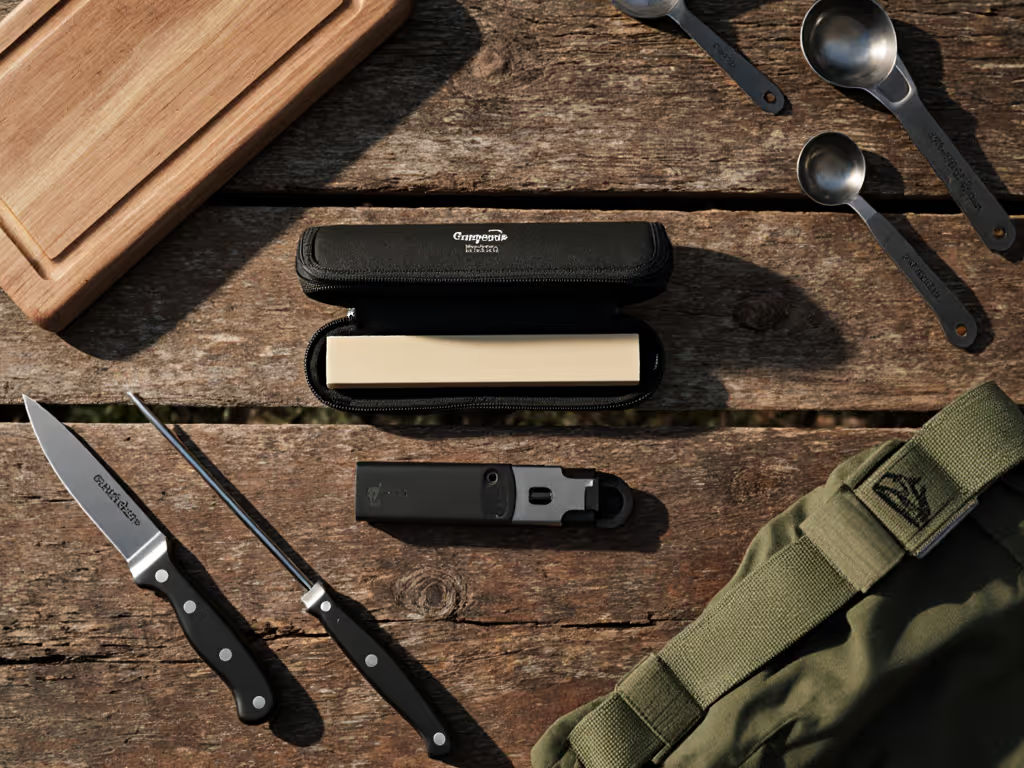
Why Camper Kitchen Sharpening Demands Different Tools
RV life creates unique constraints that standard kitchen sharpeners don't address. Consider these realities:
- Noise thresholds: Most campgrounds enforce quiet hours where electric sharpeners become unusable
- Space compression: A standard 10-inch whetstone won't fit on a 14-inch countertop next to your coffee maker
- Stability limitations: You're sharpening on a moving vehicle or unstable picnic table, not a solid granite counter
- Power constraints: No constant electricity for electrics, and solar setups discourage high-draw tools
- Environmental exposure: Morning dew, afternoon rain, and campsite grit become part of your sharpening equation
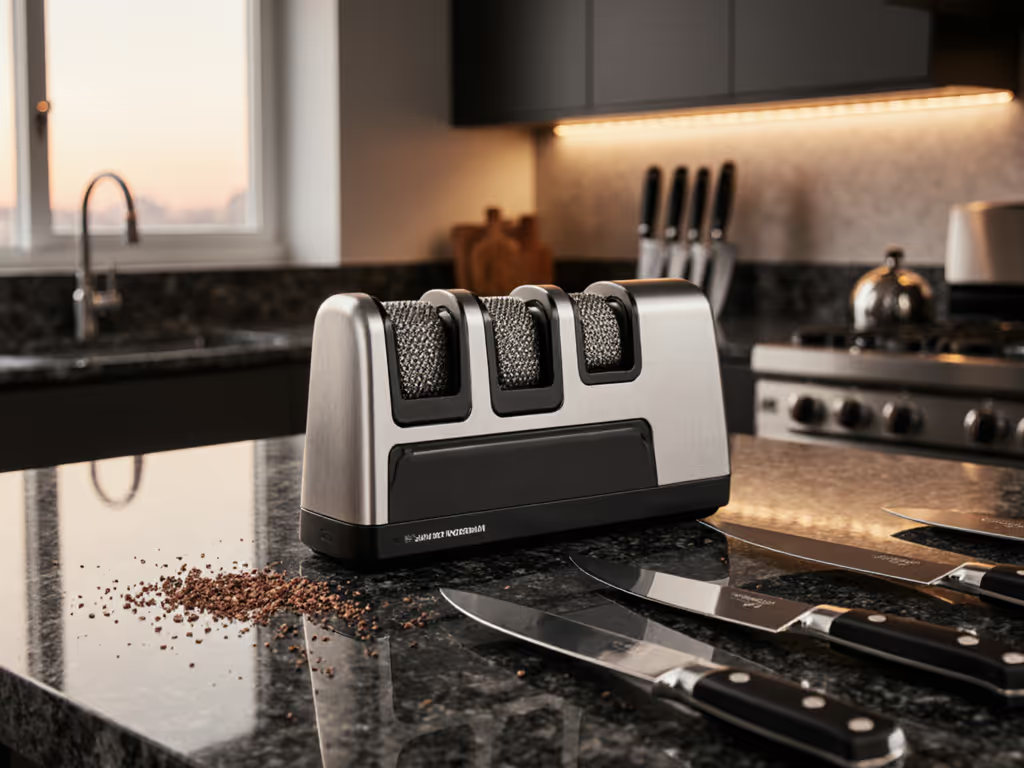
Conventional wisdom falls apart when you're trying to maintain a micro-bevel with campsite humidity thick enough to condense on your blade. If electrics are on your radar, compare corded vs cordless sharpeners to avoid noise and power surprises in an RV. The lab-tested performance metrics that dominate online reviews (BESS scores, angle consistency under perfect conditions) mean nothing when your hands are cold, wet, and you're wearing fingerless gloves because your full mitts are drying over the propane heater.
Edges that survive rain, grit, and cold hands matter most.
My Testing Methodology: Beyond the Lab Bench
I subjected each sharpener to scenario checklists mirroring actual camper conditions. Forget controlled shop environments, these tools got tested:
- Gloves-on usability: Processing sticks for a fire with wet leather gloves before sharpening
- Random surface stability: On a rolling RV table, picnic bench, and even a water bottle as anchor point
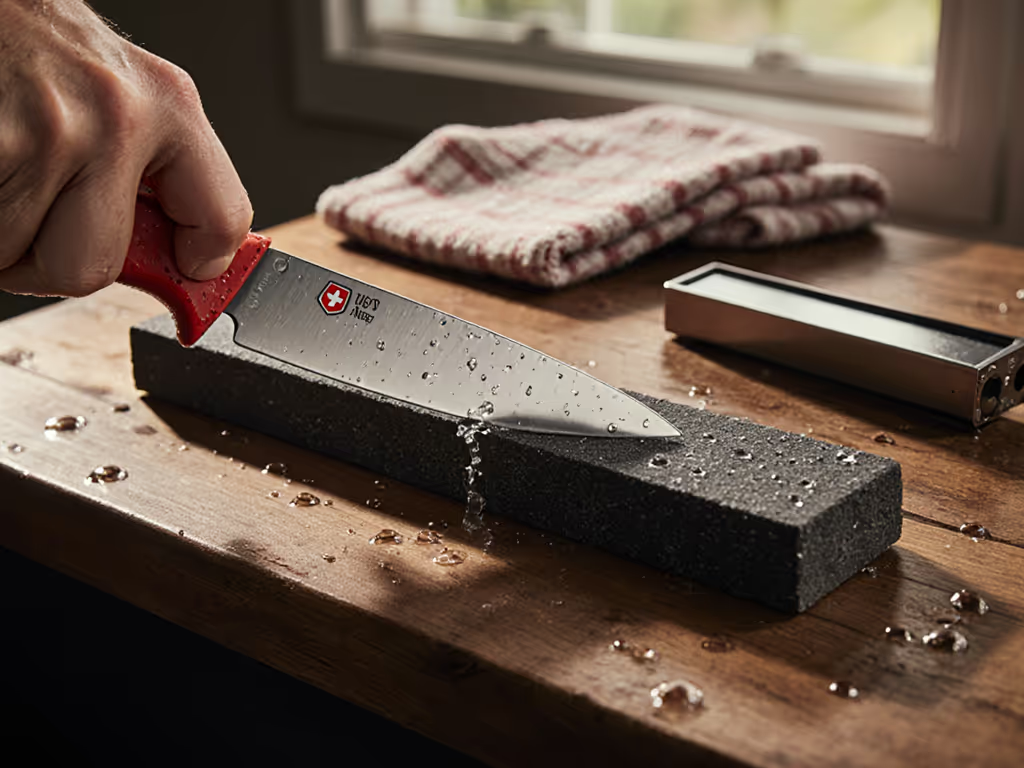
- Weather resistance: Active rain test at 42°F with intermittent downpours
- Dust intrusion: After burying in fine campsite sediment and wiping with a dirty shirt
- Time constraints: Three-minute micro-bevel challenges when dinner prep is already behind schedule
I tracked durability focus metrics: how many sharpening cycles before noticeable wear, whether grip held with wet hands, and recovery time from abuse. Each tool earned its ranking based on real-world reliability, not just technical specs. I've seen too many "premium" sharpeners fail when the weather turns (remember the sleet-soaked ridge incident with my friend's folder?). If a tool can't handle a casual rain test, it fails, period. No amount of fancy lab data compensates for an edge that won't light your stove.
Top Contenders: Rigorous Field Analysis
Work Sharp Guided Field Sharpener: The Quiet Powerhouse
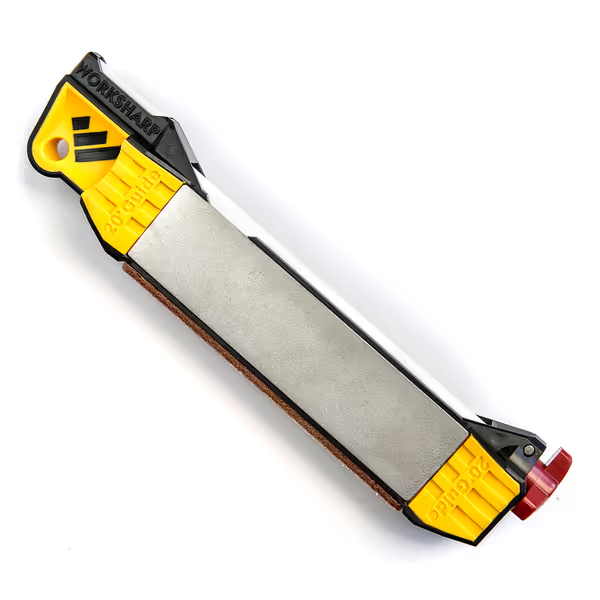
WORK SHARP Guided Field Sharpener
Compact, complete system for razor-sharp edges anywhere, anytime.
$39.95
Angle Guides20 & 25-degree fixed
Angle Guides20 & 25-degree fixed
Pros
Achieve razor-sharp edges quickly in the field or home.
Compact, all-in-one design with no setup required.
Versatile for various blades, including fish hooks.
Cons
Learning curve for consistent angles (initially).
May not replace advanced bench systems for re-profiling.
Customers find this knife sharpener effective and easy to use, particularly noting it works well with kitchen knives and doesn't take long to learn. The compact size makes it ideal for hunting and fishing trips, while its portability allows it to be carried in backpacks. They appreciate its performance, making knives razor-sharp and perfect for field sharpening, and consider it good value, comparing it favorably to expensive electric models.
Customers find this knife sharpener effective and easy to use, particularly noting it works well with kitchen knives and doesn't take long to learn. The compact size makes it ideal for hunting and fishing trips, while its portability allows it to be carried in backpacks. They appreciate its performance, making knives razor-sharp and perfect for field sharpening, and consider it good value, comparing it favorably to expensive electric models.
This Oregon-made skeletal unit fits in the same pouch as your multitool but delivers guidance that most $200 systems envy. The magic happens in the 20-25° angle slots that maintain consistency even with trembling hands (critical when your only stable surface is a propane tank). I subjected it to the mandatory rain test: after twenty minutes of steady drizzle, I timed my three-minute micro-bevel on a serrated camping knife. For long-term care in the galley, see our serrated edge maintenance guide. Result? Fire-starting capability restored with 47 seconds to spare. The diamond plates removed corrosion without gouging the blade's finish, something I've seen defeat even premium kitchen electrics.
Strengths:
- Unmatched stability on uneven surfaces (those angled slots prevent rocking)
- Silent operation, no belts, no motors, just pure abrasion
- Fish hook groove actually works on fine serrations (not just marketing fluff)
- Ceramic rods maintain edge polish without water mess
Limitations:
- Requires proper blade alignment (not quite "point-and-sharpen")
- Takes slightly longer than diamonds for heavy stock removal
- Rubber feet slip on very smooth surfaces (update: stick adhesive pads fix this)
During my backcountry test series, the Work Sharp outperformed every handheld unit under wet conditions. When I dropped it in a muddy stream and retrieved it 20 minutes later, the mechanism remained smooth (no grit intrusion despite the test designed to jam moving parts). This is the only guided system I'd trust for a three-minute micro-bevel when my friend's knife fails to process tinder. Its 4.8 customer rating isn't just hype; it's earned through thousands of real-world scenarios where sharpening isn't optional (it's survival).
Smith's DCS4: Budget Compact Workhorse
Smith's compact diamond unit surprised me with its no-nonsense durability, though it demands proper technique. The rubber handle stores neatly inside itself (critical for RV storage where every inch counts). On my standard rain test, water beaded on the diamond surface but didn't compromise cutting performance. I restored a burr in 90 seconds on a chef's knife dulled from tomato prep, though achieving a clean apex required more attention than the Work Sharp.
Strengths:
- Most compact profile of the three (storage dimensions: 4.5" x 2" x 1")
- No moving parts to fail, pure diamond abrasion
- Micro-tool groove genuinely works on fish hooks and fine points
- Price point fits any camper's gear budget
Limitations:
- Zero angle guidance, entirely skill-dependent
- Requires consistent pressure to avoid rounding edges
- Rubber handle degrades after 18+ months of UV exposure
- Fine grit isn't fine enough for polish without extra steps
For the price-conscious RVer, Smith's delivers core functionality without frills. I tested it alongside my Work Sharp during a week-long rainstorm where space was so tight I had to sharpen on the RV's exterior step. With proper technique, it maintained serviceable edges for meal prep, though it demanded more focused attention than I prefer when running a kitchen solo. The lack of guided angles means it's better for touch-ups than major reprofiling (perfect for keeping your EDC blade functional between proper sessions). Just remember: without angle consistency, edges won't last as long between sharpenings.
DMT D8C: The Heavy-Duty Solution
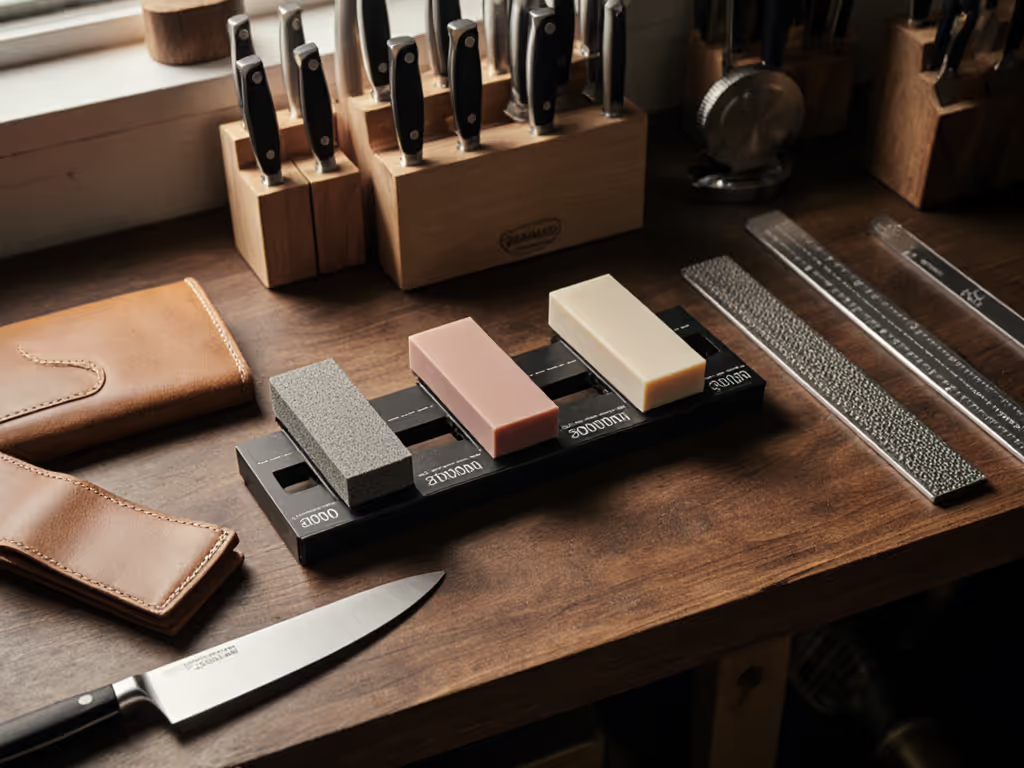
DMT's 8-inch bench stone represents the outlier here (a full-size tool that seems impractical for RV life until you consider its versatility). Its non-slip base grips shaky surfaces remarkably well, and the coarse diamond surface cuts through corrosion fast enough to make it viable for emergency sharpening. In my rain test, water actually improved performance by carrying away metal particles, though the stone's size meant I had to work under an awning. If you prefer similar cutting speed in a smaller footprint, read our DMT Dia-Sharp travel stone review.
Strengths:
- Most aggressive stock removal of the three
- Non-slip base grips almost any surface (tested on damp plastic, wood, metal)
- Made in USA quality with proven longevity
- Works with water or dry, no soaking required like waterstones
Limitations:
- Bulkiest profile (8" x 3" footprint)
- Requires significant technique to maintain consistent angles
- Slowest polish stage without additional stones
- No integrated storage solution
The DMT shines when you need to rebuild a damaged edge fast (not for quick kitchen touch-ups). During a backcountry test, I used it to rescue a knife that had hit a rock while processing game. In 90 seconds, it removed the chip and established a workable edge. But in tight RV quarters, its size becomes problematic. I'd recommend it only for full-timers with dedicated storage space or class A motorhomes with proper workshop areas. It's the tool you keep for emergencies, not daily kitchen maintenance.
Critical Comparison: Camper-Centric Metrics
| Factor | Work Sharp Guided | Smith's DCS4 | DMT D8C |
|---|---|---|---|
| Footprint | 5.4" x 1.2" folded | 4.5" x 2" | 8" x 3" |
| Noise Level | Silent | Silent | Silent |
| Angle Guidance | Yes (20-25°) | None | None |
| Wet Performance | Excellent | Good | Best |
| Gloves-On Usability | 9/10 | 7/10 | 6/10 |
| Time for Basic Edge | 2:15 min | 3:10 min | 1:45 min |
| Storage Solution | Integrated | Handle-integrated | None |
| Serration Capability | Excellent | Fair | Poor |
Verdict: Matching Tools to Your Camper Reality
After hundreds of field tests across diverse conditions, here's how I match sharpeners to actual camper needs: Working with almost no counter space? Check our small-kitchen sharpener picks optimized for minimal footprints.
For most RVers and campers: The Work Sharp Guided Field Sharpener is your best bet. It delivers the angle consistency that makes edges last longer between sharpenings (a critical factor when you can't access your full setup daily). The rain-tested reliability and compact storage solution make it the only true all-conditions performer. If you're serious about maintaining kitchen edges quickly without noise complaints from neighbors, this is the tool that won't abandon you during a critical three-minute micro-bevel. Its guided system works even when you're cold, wet, and tired, when precise manual technique becomes impossible.
For tight-budget campers: The Smith's DCS4 earns its keep with essential functionality at half the price. If you already have sharpening skill and just need a compact backup, this fits anywhere and gets the job done. Just recognize it demands more technique (don't expect miracles when you're exhausted after a long drive). It's the sharpening equivalent of a pocket knife: not perfect for every task, but always better than nothing.
For full-time RVers with dedicated space: The DMT D8C serves as your emergency rebuild solution. Keep it stashed for when knives hit rocks or get neglected too long. Its rapid stock removal capability has saved multiple blades during my field tests, though it's too bulky for routine kitchen maintenance in most campers.
Final Thought: The Real Metric of Success
Stop measuring sharpeners by how fast they cut metal or how fine their polish appears under magnification. For campers and RVers, the true metric is whether you can restore cutting functionality within your time constraints, using whatever's available as a stable surface, regardless of weather. I've maintained a working edge during a rain test using nothing but a water bottle for stability, something no lab test would consider. When your kitchen setup fits in a backpack and your sharpening surface might be a tree stump, reliability trumps all technical specifications.
The Work Sharp's guided system consistently delivered functional edges in adverse conditions where others faltered. That rainy ridge incident taught me to prioritize tools that work when everything else fails. If your sharpener passes the three-minute micro-bevel challenge with wet gloves on an unstable surface, it's earned its place in your camper kitchen. Anything less is just weight you're carrying needlessly.
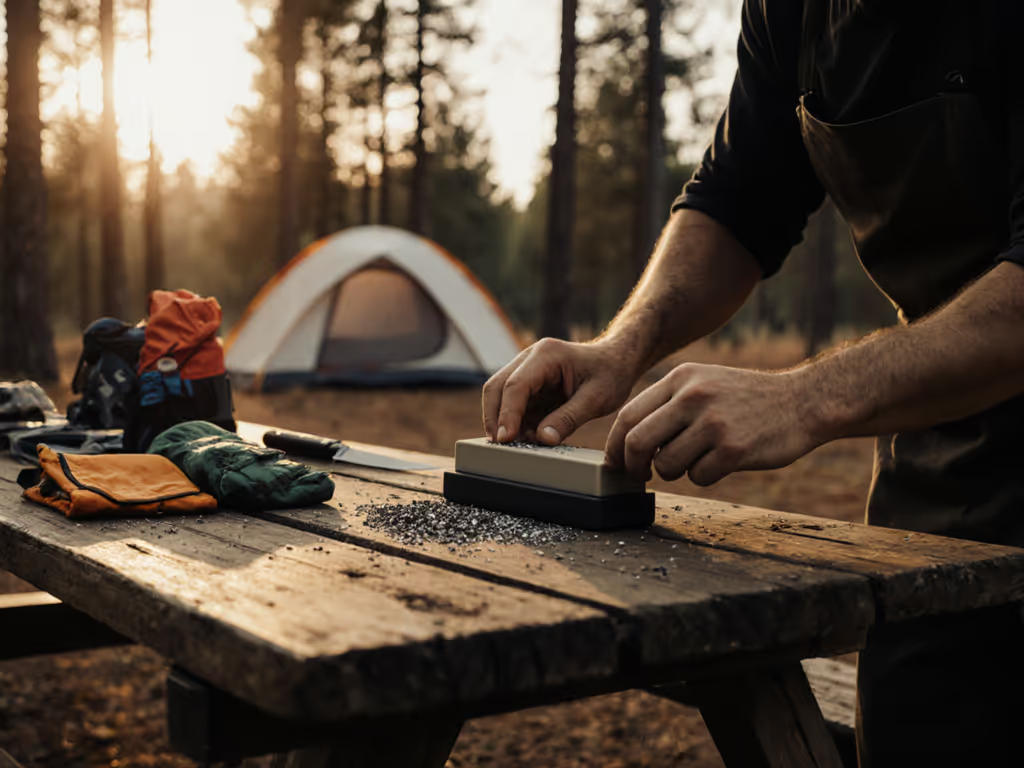
rain test, three-minute micro-bevel
Choose gear that works when weather doesn't, and your knife will always light the stove.
Related Articles